Some radiators get hot quickly while others stay lukewarm? Here’s what you can do:
DIY Checks You Can Do
Check which radiators heat fastest
Turn the heating on from cold and note which radiators get hot first. These are nearest the boiler or have valves too far open.
Feel all radiators
Once the heating has run for 20 minutes, feel each radiator. They should all be similarly hot.
Check both valves are open
Each radiator has two valves. Make sure the lockshield valve (usually covered with a cap) is open.
Check system pressure
The pressure should be between 1–1.5 bar. Low pressure affects circulation.
Bleed all radiators
Air in the system prevents proper balancing and even heating.
Need Help Balancing Your Radiators?
Book now CALL FREE: 0800 328 0449
We’re Advanced Heating and Plumbing, covering North London, West London, Watford, Herts and Middx. We can balance your radiators so all rooms heat evenly.
Call 0800 328 0449 nowWhat Is Radiator Balancing?
Radiator balancing adjusts the flow of hot water to each radiator so they all heat up evenly and at the same rate.
Why it’s needed: Water takes the path of least resistance. Without balancing, radiators nearest the boiler get too much flow, while those further away get too little.
Result: Some rooms overheat while others stay cold, even though the boiler is working fine.
Signs Your Radiators Need Balancing
Uneven heating – some radiators are hot while others are lukewarm or cold.
Radiators nearest the boiler are very hot.
Long heat-up times – system takes a long time to warm up.
Tools You Need
Lockshield valve key or adjustable spanner – for adjusting valves.
Screwdriver – to remove lockshield valve covers.
How to Balance Radiators Step-by-Step
Turn heating off – Let the system cool completely.
Open all valves fully – Open all TRVs to maximum and all lockshield valves fully.
Turn heating on – Set the thermostat high so the boiler runs continuously.
Identify the fastest heating radiator – Usually the one nearest the boiler.
Adjust this radiator first – Close its lockshield completely, then open it a quarter turn.
Move to the next nearest radiator – Close fully, then open half a turn.
Continue for all radiators – Furthest radiators should remain fully open.
Check and fine-tune – After 30 minutes, all radiators should be evenly hot.
Which Valve Do You Adjust?
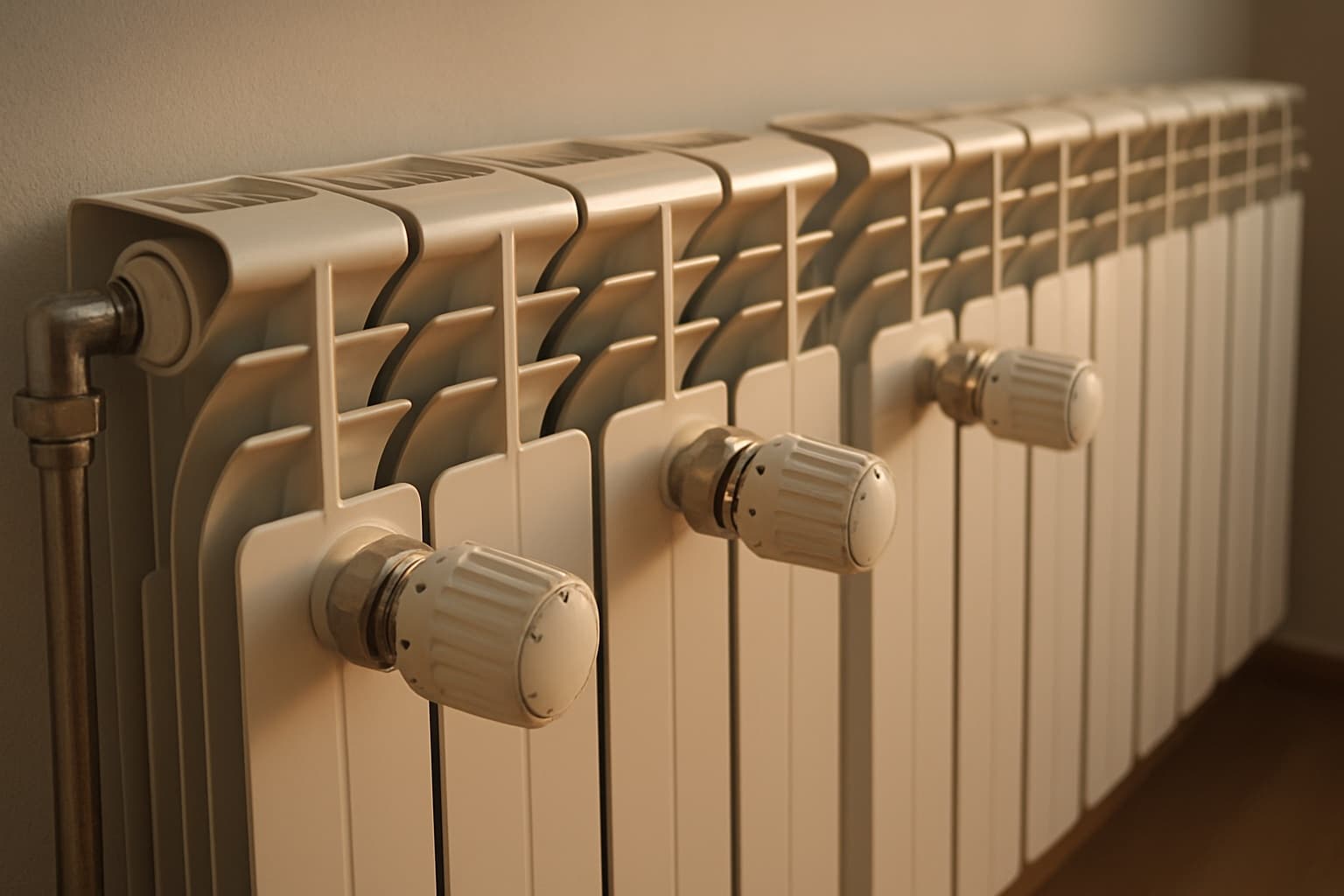
Thermostatic Radiator Valve (TRV) – The valve with numbers (0–5). This controls room temperature. Do not adjust for balancing — set it to your desired temperature.
Lockshield Valve – The valve at the other end, usually with a plastic cap. This controls water flow and is the one you adjust for balancing.
Common Mistakes to Avoid
Adjusting TRVs instead of lockshield valves.
Not fully opening distant radiators.
Rushing the process – allow the system to stabilise after each adjustment.
Not bleeding radiators first – trapped air gives false readings.
Adjusting while the system is hot – always start from cold.
When Balancing Won’t Help
If radiators are still uneven after balancing, you might have:
Sludge in the system – may need power flushing.
Pump issues – pump speed incorrect or failing.
Blocked pipes or radiators – may need professional cleaning.
These issues require expert diagnosis.
Booking Professional Radiator Balancing Is Easy with Us
In London, Watford, Hertfordshire and Middlesex locations locations
Can't fix it yourself?
Our Gas Safe engineers repair gas, oil, and electric boilers same-day. No call-out fee — we quote before we start.
Found this useful? Add Advanced Heating & Plumbing as a preferred source on Google Search and AI Overviews.