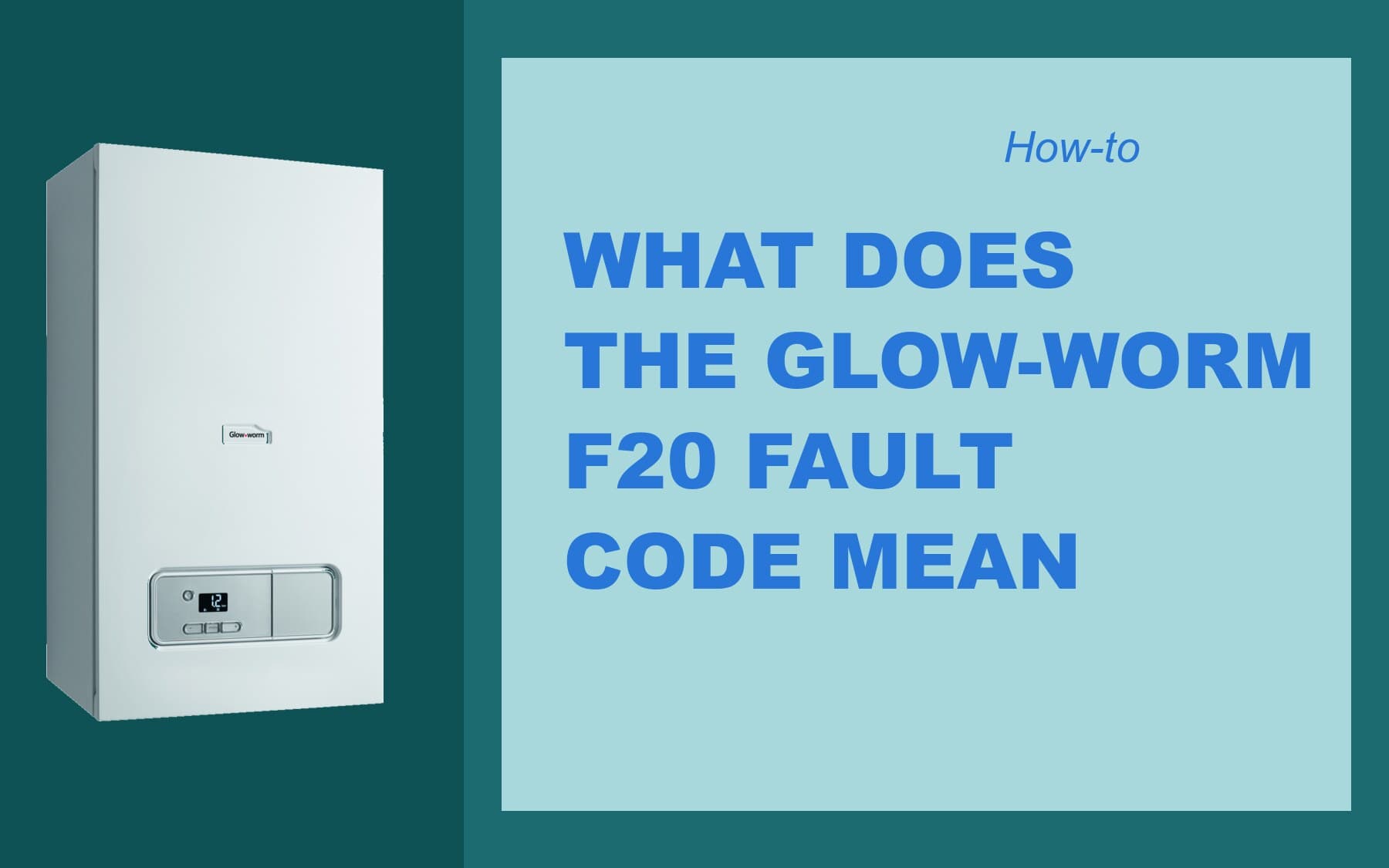
What does the Glow-worm F.20 fault code mean?
Glow-worm displays this code as F.20 (with a dot). Glow-worm's own fault-code documentation defines it as: "the safety thermal cut out has operated shutting the boiler off." Put simply: the boiler has detected an unsafe condition and locked out to protect itself. It is not a broken boiler; it is the boiler doing its job.
F.20 appears across the modern Glow-worm ranges most commonly fitted in UK homes: Energy, Ultracom, Ultimate, Betacom, Easicom and Compact. Diagnostic priorities are broadly the same across the range, but component locations vary by model.
Short on time?
The quickest, safest way to get your Glow-worm boiler working again is a call to a Gas Safe engineer. We are Watford-based and cover Hertfordshire, North London, West London and Middlesex. No-obligation phone consultation.
Glow-worm's official F.20 causes (in the order Glow-worm lists them)
Glow-worm's own online fault-code library sets out the seven possible causes of an F.20 lockout. Any Gas Safe engineer diagnosing your boiler should be working through this list before condemning parts. The order matters, because Glow-worm lists the most common causes first:
- System water pressure below the normal range of 1 to 1.5 bar. Glow-worm's diagnostic tree starts here for a reason. Under-pressurised systems trip the safety cut out because water cannot circulate properly to move heat away from the heat exchanger. Check the pressure gauge on the front of the boiler first.
- Fault in the electrical connection for the flow and/or return temperature sensor. The sensors themselves may be fine; the wiring or plug is loose or corroded.
- Flow and/or return temperature sensor defective. Sensor has failed and reports incorrect temperatures, triggering the safety lockout even when the boiler is not actually overheating.
- Circulation fault: pump, valve or blockage. Anything that stops water moving through the heat exchanger. Includes seized pumps, jammed motorised valves, closed radiator valves, airlocks, or sludge blockage.
- Water pressure sensor defective. Boiler cannot read pressure correctly, so it defaults to a safety lockout.
- Volume flow sensor defective. Specific to the Glow-worm design, this sensor confirms water is actually moving. If it fails, the boiler locks out even when flow is fine.
- Ignition cable, ignition plug or ignition electrode. Combustion-side fault that can trip the safety cut out on repeated failed ignition attempts.
Source: Glow-worm homeowner fault-code library (glow-worm.co.uk).
What to check yourself first (Glow-worm's own guidance)
Glow-worm recommend these safe checks before booking an engineer visit. They map directly to the list above.
1. Check the water pressure
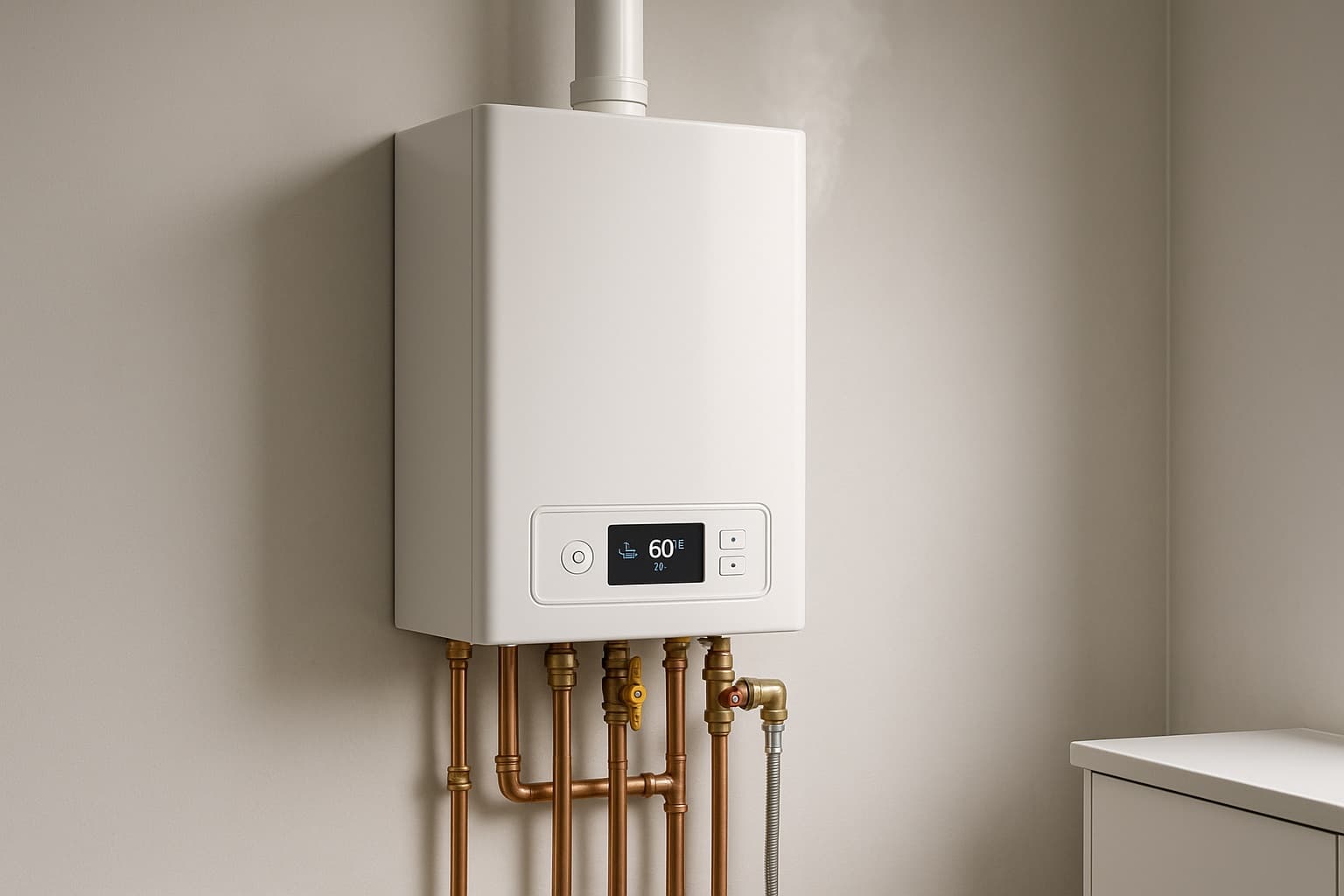
The pressure gauge on your Glow-worm boiler should read 1 to 1.5 bar when the system is cold. Below 1 bar and the boiler will struggle to circulate properly, which is Glow-worm's number-one listed cause of F.20. Most Glow-worm boilers have a filling loop underneath. Open the valves slowly, top pressure up to 1.2 to 1.5 bar, then close firmly.
If pressure keeps falling after topping up, you have a leak somewhere in the system. Stop, and call an engineer.
2. Look for visible leaks and check the wider system
Glow-worm's own guidance explicitly asks you to check for leaks, confirm radiator valves are open, confirm external pumps and zone valves are working, and confirm there are no airlocks. Unlike some other brands' F20 codes, the Glow-worm F.20 diagnostic assumes the fault may be in the wider heating system, not just inside the boiler.
3. Reset the boiler once (only once)
Find your Glow-worm user manual (there is a manual finder on the Glow-worm website) and follow the reset procedure for your specific model. If F.20 clears and stays clear for a few days, you were probably just seeing a transient pressure drop. If F.20 comes back, the underlying cause is still there. Repeated resets will not fix it and can damage the boiler over time.
Glow-worm's own words on this: "This is a case for a Glow-worm installer in the first instance, as it can relate to how the boiler is working with the heating system."
How Glow-worm F.20 differs from Vaillant F20
Glow-worm has been part of the Vaillant Group (registered office: Nottingham Road, Belper, Derbyshire DE56 1JT) since 2001. That shared ownership fools a lot of people into assuming Glow-worm F.20 and Vaillant F20 are the same fault. They are not.
- Notation is different. Glow-worm boilers display it as F.20 (with a dot). Vaillant boilers display it as F20 (no dot).
- Glow-worm's official diagnostic tree leads with water pressure and system-side causes. Vaillant's F20 diagnostic tree leads with the internal temperature-sensor circuit and heat exchanger flow. Same symptom (safety cut out has tripped) but a different first-check.
- Glow-worm's parts list for F.20 includes the volume flow sensor, a component specific to the Glow-worm design that does not appear in Vaillant's F20 diagnostic.
- Glow-worm's guidance explicitly widens the check to external pumps and zone valves. The Vaillant F20 guide stays inside the boiler.
If you have a Vaillant boiler rather than a Glow-worm one, use the Vaillant F20 guide. Same code label, different diagnostic path.
When to call a Gas Safe engineer
Stop trying self-fixes and call us if any of the following apply:
- F.20 returns after one reset
- System pressure keeps falling no matter how many times you top it up (there is a leak)
- Radiators feel unusually hot before the boiler locks out
- Loud banging, kettling or whistling from the boiler when it runs
- The boiler is 8 to 10 years old or older and has not been serviced annually (sludge and sensor drift both accelerate at that age)
- You smell gas at any point (leave the property and call the National Gas Emergency line on 0800 111 999 before doing anything else)
We diagnose F.20 lockouts as part of a standard boiler repair visit. Vaillant Group parts are widely stocked so most Glow-worm F.20 fixes complete same-day when the fault is a sensor, pressure sensor or ignition electrode. Sludge-driven lockouts may need a power flush. We diagnose first, quote a fixed price, and only proceed with your approval.
Preventing future Glow-worm F.20 lockouts
Annual servicing is the single biggest preventer. A proper Glow-worm service checks the pressure sensor, flow/return sensors, gas pressure, combustion, and system pressure and flow. That is the exact chain of components Glow-worm lists as F.20 causes. If a MagnaClean or similar magnetic filter is fitted, cleaning it at service time stops sludge accumulating in the heat exchanger, which reduces flow and eventually trips F.20.
If a Glow-worm boiler is over 8 to 10 years old and locking out on F.20 repeatedly, a new boiler installation may work out cheaper than continuing to replace failing sensors and pumps. Modern boilers carry longer manufacturer warranties (up to 10 years on some Glow-worm and Vaillant ranges).
Frequently asked questions
Why does Glow-worm display it as F.20 and not F20?
Glow-worm uses dot notation across their fault-code range: F.20, F.22, F.28 and so on. Vaillant boilers display the same category of codes without the dot (F20, F22, F28). Same parent company (Vaillant Group), different display convention on the control board. The dot has no diagnostic meaning; it is a house style.
Can I just keep resetting my Glow-worm boiler when F.20 appears?
Reset once to see if the fault was transient. If F.20 comes back, repeated resets do not fix the underlying cause. Glow-worm's own guidance is to escalate to an installer at that point. Overriding a safety lockout risks damaging the heat exchanger, which is by far the most expensive part to replace.
Is the Glow-worm F.20 fault dangerous?
The lockout itself is a safety feature: the boiler has shut down because it detected an unsafe condition. That is a good thing. However, if you smell gas at any time, leave the property immediately and call the National Gas Emergency line on 0800 111 999. Do not attempt to restart the boiler if you suspect a gas leak.
Why does my Glow-worm boiler lock out on F.20 in winter only?
Winter stresses the system harder: longer run times, higher demand, colder return temperatures. A marginal sensor or a partially-blocked heat exchanger may pass in summer but fail in winter. The root cause is the same year-round; winter just exposes it. An annual service before the heating season catches most of them.
How much does it cost to fix a Glow-worm F.20 fault?
Diagnostic time is chargeable at our labour rate (minimum one hour); the fix is then quoted as a fixed price before any repair starts. The fix depends on which of Glow-worm's listed causes it is: a sensor or wiring fix is typically a standard boiler repair. A pump replacement is a bigger job. A full power flush to clear sludge is priced separately. We only proceed with your approval.
Which Glow-worm boilers show F.20?
Any modern Glow-worm boiler with a digital display can show F.20: Energy, Ultracom, Ultimate, Betacom, Easicom and Compact. Some older Glow-worm units use different fault-code conventions or flashing-LED patterns instead of a digital code. In those cases the underlying safety-cut-out logic is similar but the display is not F.20.
Related guides
The Vaillant F20 code differs from Glow-worm's — see our Vaillant F20 guide if you're diagnosing a Vaillant-branded boiler instead. If you need hands-on help in the area, our Watford heating engineers cover Glow-worm servicing, repairs and installs across Watford and the surrounding towns.
Can't fix it yourself?
Our Gas Safe engineers repair gas, oil, and electric boilers same-day. No separate call-out fee. Diagnosis is charged at our labour rate, and we quote before we start.
Found this useful? Add Advanced Heating & Plumbing as a preferred source on Google Search and AI Overviews.